- MAP can be determined for any patient whose blood pressure has been measured, making it universally applicable in clinical settings from the emergency department to routine checkups.
- Achieving specific blood pressure goals has demonstrated measurable improvements in patient outcomes across several critical conditions, including sepsis, major trauma, acute ischemic or hemorrhagic stroke, intracranial hemorrhage, and hypertensive crises.
- Depending on the clinical scenario, treatment protocols may reference either the Systolic Blood Pressure (SBP) alone or the Mean Arterial Pressure (MAP) as the target metric. Knowing MAP helps clinicians align with whichever guideline is most appropriate for the patient’s condition.
- MAP is mathematically derived from two easily obtainable measurements — Systolic Blood Pressure (SBP) and Diastolic Blood Pressure (DBP) — and gives a single value that reflects the average pressure within the arteries during one complete cardiac cycle.
- Clinicians frequently prefer MAP over SBP when assessing tissue perfusion because approximately two-thirds of each heartbeat cycle is spent in diastole. By weighting diastolic pressure more heavily, MAP provides a more accurate snapshot of the constant driving pressure that pushes blood into the capillary beds.
- A minimum MAP of approximately 60 mmHg is widely regarded as the threshold below which vital organs such as the brain, kidneys, and heart may not receive sufficient blood flow to function properly.
- It is important to remember that MAP is the product of Cardiac Output (CO) and Systemic Vascular Resistance (SVR) — expressed as MAP = CO × SVR. Because of this relationship, a patient can present with a seemingly adequate MAP while actually having dangerously low cardiac output if their vascular resistance is abnormally high. A classic example is cardiogenic shock, where the heart’s pumping ability is critically impaired yet elevated SVR may temporarily maintain an acceptable MAP reading, masking the underlying perfusion deficit.
- MAP should be calculated whenever the clinical situation calls for blood pressure management based on mean pressure rather than systolic pressure alone. This is especially important in intensive care units, operating rooms, and emergency departments where patients present with acute conditions — such as severe sepsis, post-surgical hypotension, or traumatic brain injury — and there is a direct concern about whether organs are receiving adequate blood flow to sustain normal function.
- Using MAP as a hemodynamic target allows healthcare providers to make more informed decisions about fluid resuscitation, vasopressor dosing, and other interventions aimed at restoring or maintaining optimal organ perfusion.
Management Approach
- When MAP falls outside the normal physiological range, the primary goal of treatment is to restore effective blood circulation. Depending on the cause and severity, this may involve intravenous fluid administration, vasopressor medications (such as norepinephrine or vasopressin), or broader hemodynamic support strategies.
- The choice of intervention is guided by the patient’s underlying condition. For instance, a low MAP caused by dehydration is managed differently than one resulting from sepsis or acute heart failure — each scenario demands a tailored treatment pathway.
- In patients with chronically elevated blood pressure, a high MAP may warrant antihypertensive therapy to reduce the risk of long-term end-organ damage to the kidneys, brain, and cardiovascular system.
Critical Thresholds to Know
- A MAP of approximately 60 mmHg is generally accepted as the lowest threshold required to maintain adequate blood flow to the brain, kidneys, and coronary arteries. Below this level, the risk of organ ischemia increases significantly.
- For patients in septic shock, international guidelines (such as the Surviving Sepsis Campaign) recommend targeting a MAP of at least 65 mmHg to ensure sufficient tissue perfusion while minimizing the adverse effects of excessive vasopressor use.
- In cases of traumatic brain injury, maintaining a MAP high enough to ensure a cerebral perfusion pressure (CPP) above 60–70 mmHg is considered essential to prevent secondary brain injury.
Formula
Mean Arterial Pressure = 1/3 × (SBP) + 2/3 × (DBP)
This formula approximates the time-weighted average of blood pressure over a single cardiac cycle. Since the heart spends roughly twice as long in diastole as in systole, diastolic pressure is given double the weight.
Important Clinical Facts
- A MAP of ≥60 mmHg is widely considered the minimum threshold necessary to perfuse vital organs. Values persistently below this level may indicate hemodynamic compromise requiring urgent intervention.
- MAP provides a single, comprehensive metric that reflects the continuous driving pressure responsible for delivering oxygenated blood through the arterial system to end organs.
- Unlike systolic pressure, which represents a peak momentary force, MAP accounts for the sustained pressure present during diastole — the phase when coronary arteries receive most of their blood supply.
- Abnormally elevated MAP values over prolonged periods contribute to vascular remodeling, endothelial dysfunction, and increased risk of stroke, kidney disease, and cardiac hypertrophy.
Interpretation Guide
Literature
Purpose & Background
This calculator was built to give healthcare professionals, medical students, and informed patients a fast, reliable way to determine Mean Arterial Pressure directly from standard blood pressure readings. The underlying formula — which weights diastolic pressure at twice the contribution of systolic pressure — is the same method used in clinical practice across hospitals worldwide.
How to Use
- Enter the patient’s Systolic Blood Pressure (SBP) and Diastolic Blood Pressure (DBP) in the fields above.
- The MAP result updates automatically as you type — no need to press a separate calculate button.
- Refer to the interpretation table in the Supporting Evidence tab for clinical context on the result.
Disclaimer
This tool is provided for educational and informational purposes only. It is not intended to replace professional medical judgment. Always consult a qualified healthcare provider for clinical decision-making.
Mean Arterial Pressure (MAP) is one of the most important hemodynamic values used by doctors, nurses, and paramedics every single day. Whether you are a medical professional monitoring a critically ill patient or a health-conscious individual trying to understand your blood pressure readings better, knowing your MAP gives you a deeper insight into how well your body is delivering blood to vital organs.
Our free MAP Calculator above lets you quickly compute your Mean Arterial Pressure by entering your Systolic and Diastolic blood pressure values. The result is generated instantly — no page reloads, no sign-ups, and no complicated steps.
What Is Mean Arterial Pressure (MAP)?
Mean Arterial Pressure is the average blood pressure in your arteries during one complete cardiac cycle — that is, one full heartbeat. Unlike your standard blood pressure reading (which gives you two numbers: systolic over diastolic), MAP combines both values into a single number that represents the true driving force pushing blood through your circulatory system at any given moment.
Think of it this way: your systolic pressure is the peak pressure when the heart contracts, and your diastolic pressure is the resting pressure between beats. Since your heart spends about two-thirds of each cycle in the resting phase (diastole), MAP weights the diastolic value more heavily to reflect this reality.
In clinical settings, MAP is widely preferred over systolic blood pressure alone because it provides a more reliable picture of whether enough blood is reaching organs like the brain, kidneys, and heart.
How Does the MAP Calculator Work?
The MAP Calculator uses the standard medical formula that is taught in nursing schools, medical colleges, and used in hospitals around the world:
MAP = (SBP + 2 × DBP) / 3
Or equivalently:
MAP = 1/3 × Systolic BP + 2/3 × Diastolic BP
Here is what each component means:
- SBP (Systolic Blood Pressure): The pressure in your arteries when the heart pumps blood out. This is the top number in a blood pressure reading.
- DBP (Diastolic Blood Pressure): The pressure in your arteries when the heart is at rest between beats. This is the bottom number.
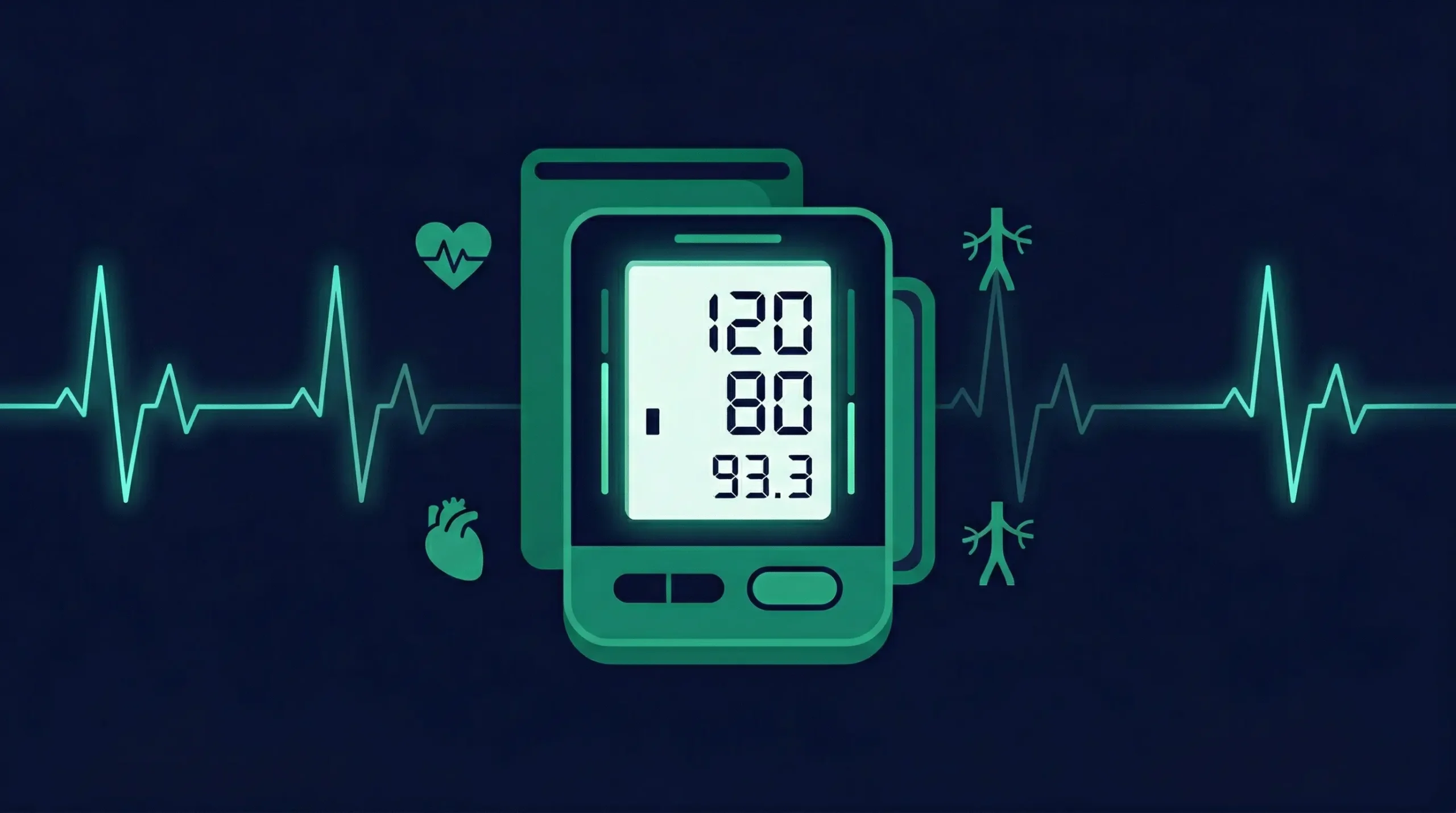
For example, if your blood pressure is 120/80 mmHg:
MAP = (120 + 2 × 80) / 3 = (120 + 160) / 3 = 280 / 3 = 93.3 mmHg
A MAP of 93 mmHg falls well within the normal range, indicating healthy arterial perfusion pressure.
What Is a Normal MAP Range?
Understanding where your MAP value falls can help you assess your cardiovascular health at a glance. Here are the generally accepted clinical ranges:
Below 60 mmHg — Dangerously Low
A MAP below 60 mmHg is considered critically low. At this level, vital organs may not receive enough blood to function properly. This can lead to organ damage, tissue death, and in severe cases, multi-organ failure. Patients with a MAP this low typically require emergency medical intervention, including intravenous fluids and vasopressor medications.
60 to 70 mmHg — Borderline Low
This range is a clinical gray zone. While some patients may tolerate a MAP in this range without symptoms, others — particularly those with pre-existing conditions like chronic kidney disease or coronary artery disease — may begin to show signs of inadequate perfusion. Close monitoring is essential.
70 to 100 mmHg — Normal Range
A MAP between 70 and 100 mmHg is considered optimal for most adults. This range ensures that sufficient pressure exists to push blood through the smallest blood vessels (capillaries) and deliver oxygen and nutrients to tissues throughout the body.
Above 100 mmHg — Elevated
A persistently elevated MAP above 100 mmHg may indicate hypertension. Over time, high MAP values can damage blood vessel walls, strain the heart, and increase the risk of stroke, heart attack, kidney failure, and vision problems. If your MAP consistently falls in this range, consult a healthcare provider for evaluation and potential treatment.
Why Is MAP More Important Than Systolic Blood Pressure?
Most people are familiar with the standard blood pressure reading — “120 over 80” — but this format has limitations. Systolic blood pressure only captures the peak pressure during a heartbeat, which represents just one-third of the cardiac cycle. The remaining two-thirds of the time, the heart is in diastole, and the pressure during this phase plays a critical role in maintaining continuous blood flow.
MAP solves this problem by providing a time-weighted average that accounts for both phases. Here is why clinicians often rely on MAP rather than SBP:
Better Indicator of Organ Perfusion
MAP directly reflects the constant pressure driving blood into the capillary beds where gas exchange occurs. A patient can have a “normal” systolic reading yet still have inadequate tissue perfusion if the diastolic pressure is abnormally low.
More Stable Measurement
Systolic blood pressure tends to fluctuate with every heartbeat, physical movement, or emotional change. MAP, because it averages across the entire cardiac cycle, provides a more stable and reproducible value — making it a more reliable metric for clinical decision-making.
Essential in Critical Care
In intensive care units (ICUs), emergency rooms, and operating theaters, treatment protocols are frequently based on MAP targets rather than systolic targets. For example, the Surviving Sepsis Campaign — one of the most widely followed critical care guidelines globally — recommends targeting a MAP of at least 65 mmHg in patients with septic shock.
When Should You Calculate MAP?
While MAP is most commonly used in hospital settings, there are several scenarios where calculating it can be valuable:
Managing Sepsis and Septic Shock
Sepsis is a life-threatening response to infection that can cause dangerously low blood pressure. In these patients, maintaining a MAP of 65 mmHg or higher is a primary treatment goal. The MAP Calculator helps clinicians quickly assess whether the patient is meeting this threshold after fluid resuscitation or vasopressor administration.
Monitoring Traumatic Brain Injury (TBI)
In patients with traumatic brain injury, maintaining adequate cerebral perfusion pressure (CPP) is critical to preventing secondary brain damage. Since CPP is calculated as MAP minus intracranial pressure (ICP), knowing the precise MAP value is essential for guiding treatment.
During Surgical Procedures
Anesthesiologists closely monitor MAP during surgery to ensure that the patient’s organs continue to receive adequate blood flow while under anesthesia. Significant drops in MAP during an operation may require immediate intervention with fluids or medications.
Evaluating Hypertension
For patients with chronic high blood pressure, tracking MAP over time can provide additional insight beyond standard systolic and diastolic readings. It helps physicians evaluate whether antihypertensive medications are effectively reducing the overall pressure load on the cardiovascular system.
Pregnancy-Related Complications
Pre-eclampsia and eclampsia are serious pregnancy complications characterized by dangerously high blood pressure. Monitoring MAP in pregnant patients helps healthcare providers identify these conditions early and intervene before they progress to life-threatening stages.
How to Measure Blood Pressure for MAP Calculation
To use the MAP Calculator accurately, you need a reliable blood pressure reading. Here are best practices for getting an accurate measurement:
- Sit quietly for at least 5 minutes before measuring. Avoid caffeine, exercise, and smoking for at least 30 minutes prior.
- Sit with your feet flat on the floor and your back supported. Do not cross your legs.
- Place the blood pressure cuff on your bare upper arm, approximately one inch above the elbow crease.
- Rest your arm on a flat surface at heart level.
- Take two or three readings, separated by one to two minutes, and use the average values for the most accurate MAP calculation.
- Record the Systolic (top number) and Diastolic (bottom number) values, then enter them into the MAP Calculator above.
Using an automated digital blood pressure monitor approved for clinical use will give you the most reliable results. Wrist monitors and finger monitors, while convenient, are generally less accurate than upper-arm cuff devices.
MAP in Different Clinical Conditions
Mean Arterial Pressure targets vary depending on the patient’s medical condition. Here is how MAP is used across different clinical scenarios:
Septic Shock
Target MAP: ≥ 65 mmHg. The Surviving Sepsis Campaign guidelines recommend maintaining this minimum threshold using a combination of intravenous fluids and vasopressors (such as norepinephrine). Studies have shown that targeting a MAP below 65 mmHg is associated with increased mortality, while pushing it significantly higher (e.g., 80–85 mmHg) does not provide additional survival benefit in most patients.
Acute Ischemic Stroke
In the early hours of an acute ischemic stroke, permissive hypertension may be allowed — meaning the MAP is intentionally kept higher than normal to maintain blood flow to the ischemic penumbra (the at-risk brain tissue surrounding the core infarct). However, excessively high MAP may increase the risk of hemorrhagic transformation.
Chronic Kidney Disease
The kidneys are highly sensitive to perfusion pressure. A MAP that is too low can lead to acute kidney injury, while a chronically elevated MAP accelerates the progression of kidney disease. Nephrologists carefully balance antihypertensive therapy to keep MAP within a range that protects remaining kidney function.
Cardiogenic Shock
In cardiogenic shock, the heart’s pumping ability is severely compromised. Because MAP equals Cardiac Output × Systemic Vascular Resistance, a patient may have an acceptable MAP number despite a critically low cardiac output — the body compensates by increasing vascular resistance. This is why MAP alone should not be used to assess cardiac function; it must be interpreted alongside other hemodynamic parameters.
Limitations of the MAP Formula
While the MAP Calculator provides a clinically useful estimate, it is important to understand its limitations:
- The formula MAP = (SBP + 2 × DBP) / 3 is an approximation. The true MAP can only be measured precisely using an invasive arterial line (a catheter placed directly into an artery). The calculated MAP may differ slightly from the true value, particularly at extreme heart rates.
- At very high heart rates (tachycardia), the proportion of time spent in systole increases, which can make the calculated MAP less accurate.
- The formula assumes a normal heart rhythm. In patients with arrhythmias such as atrial fibrillation, blood pressure readings may vary significantly from beat to beat, making any single MAP calculation less reliable.
- MAP does not tell you about cardiac output or regional blood flow. A normal MAP does not guarantee that individual organs are receiving adequate perfusion.
Despite these limitations, the calculated MAP remains an extremely valuable screening and monitoring tool in everyday clinical practice.
Frequently Asked Questions About MAP
What does a MAP of 65 mean?
A MAP of 65 mmHg is considered the minimum acceptable level for adequate organ perfusion in most clinical contexts. It is a common hemodynamic target in critical care, particularly for patients with septic shock. Below this threshold, the risk of organ damage increases substantially.
Can I calculate MAP at home?
Yes. If you have a home blood pressure monitor that gives you systolic and diastolic readings, you can enter those values into the MAP Calculator on this page. However, interpreting the clinical significance of the result should be done in consultation with a healthcare professional.
Is MAP the same as blood pressure?
No. Blood pressure is typically expressed as two numbers (systolic/diastolic), while MAP is a single calculated value that represents the average arterial pressure during one cardiac cycle. MAP provides a more comprehensive picture of perfusion pressure than either systolic or diastolic blood pressure alone.
What MAP is too low?
A MAP below 60 mmHg is generally considered too low and may result in insufficient blood flow to vital organs. However, the exact threshold at which symptoms appear varies between individuals and depends on factors like age, pre-existing conditions, and baseline blood pressure.
What MAP is too high?
A MAP consistently above 100 mmHg suggests hypertension and may warrant medical evaluation. Persistent elevation increases the risk of damage to the heart, brain, kidneys, and blood vessels over time.
How is MAP different from pulse pressure?
Pulse pressure is the difference between systolic and diastolic blood pressure (SBP – DBP), while MAP is the weighted average of the two. They measure different aspects of cardiovascular function. A wide pulse pressure may indicate arterial stiffness, while MAP reflects overall perfusion pressure.
Does age affect normal MAP values?
Yes, to some extent. Blood pressure tends to increase with age due to arterial stiffness and other cardiovascular changes. As a result, older adults may have slightly higher baseline MAP values. However, the clinical target ranges (particularly the 65 mmHg minimum for adequate perfusion) remain broadly applicable across age groups.
Key Takeaways
- Mean Arterial Pressure (MAP) is the average pressure in your arteries during one complete heartbeat cycle, and it is a better indicator of organ perfusion than systolic blood pressure alone.
- The normal MAP range is between 70 and 100 mmHg for most healthy adults.
- A MAP below 60 mmHg is a medical emergency — it means your organs may not be receiving enough blood.
- MAP is used extensively in hospitals, ICUs, and emergency departments to guide treatment for conditions like sepsis, stroke, traumatic brain injury, and surgery.
- You can calculate MAP at home using a standard blood pressure monitor and the free calculator on this page.
- While the calculated MAP is a highly useful estimate, it has limitations — the most accurate MAP measurement comes from an invasive arterial line in a clinical setting.
Use the MAP Calculator at the top of this page to check your Mean Arterial Pressure right now. If your result falls outside the normal range, consider discussing it with your doctor.